







Waking up stiff or slow-moving is common, especially after a night spent in one position. A few gentle stretches can help you transition from rest to activity and make the first part of your day feel more comfortable.
The goal is not to perform an intense workout before breakfast. Instead, focus on slow, controlled movements that encourage mobility and help you notice how your body feels. With a simple routine and a few consistent habits, stretching can become an easy part of your morning.
Why Morning Stretching Can Help
During sleep, your body stays relatively still for several hours. Muscles and joints may feel tight when you first get up, even if you slept well. Gentle movement gives your body time to warm up and prepares you for everyday activities such as walking, dressing, commuting, or working.
A short stretching routine may also help you:
– Move more comfortably after waking
– Improve awareness of posture and body position
– Create a calm start to the day
– Build consistency with healthy movement
– Reduce the temptation to rush into activity
Morning stretching should feel refreshing rather than exhausting. A few minutes of steady movement is often more useful than trying to complete a long routine once in a while.
Start Slowly Before Getting Out of Bed
You do not need to begin with large movements. Starting while seated or lying down can help you ease into the morning.
Try a Gentle Full-Body Reach
Lie on your back or sit upright in bed. Reach your arms overhead while extending your legs in the opposite direction. Keep the movement comfortable and avoid forcing your shoulders or lower back.
Hold the reach for a few relaxed breaths, then release. Repeat once or twice if it feels good.
Move Your Ankles and Wrists
Small joint movements are a simple way to wake up your body. Circle your ankles in both directions, then gently flex and point your feet. You can also open and close your hands and make slow wrist circles.
These movements take less than a minute and can be especially useful before standing.
Take a Few Easy Breaths
Sit near the edge of the bed or remain lying down. Breathe in slowly through your nose if comfortable, then breathe out without straining. Let your shoulders relax as you breathe.
Using your breathing as a guide can help you avoid moving too quickly. If you find yourself holding your breath, reduce the stretch or slow down.
Use a Simple Standing Routine
Once you are ready to stand, choose movements that involve the major areas used during the day. Keep your feet stable and use a wall, chair, or countertop for support if needed.
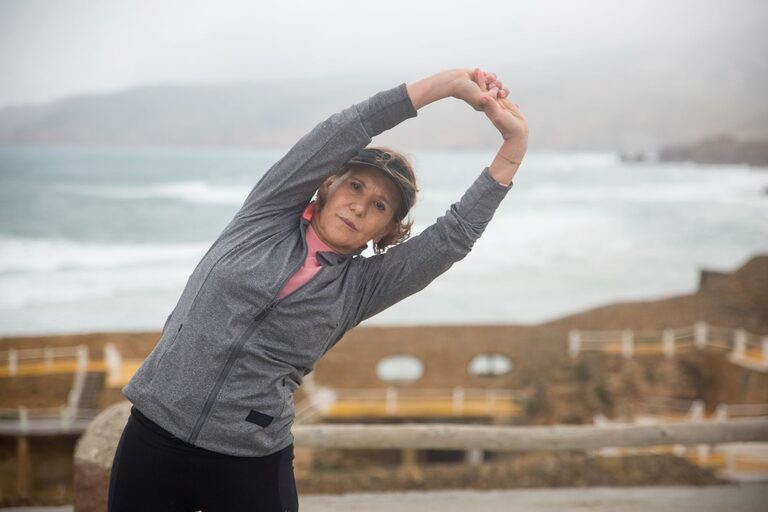
1. Overhead Side Reach
Stand with your feet about hip-width apart. Raise one arm overhead and gently lean to the opposite side. Keep both feet grounded and avoid twisting your body.
Hold for 10 to 20 seconds, then switch sides. Think of creating length along the side of your body rather than reaching as far as possible.
2. Shoulder Rolls
Lift your shoulders slightly, roll them back, and let them drop. Continue slowly for several repetitions, then reverse the direction.
Shoulder rolls are useful after sleeping with your head turned or spending a lot of time at a desk. Keep the circles relaxed and avoid shrugging forcefully.
3. Chest Opening Stretch
Stand beside a doorway or place your hands behind your back. If using a doorway, rest your forearms lightly against the frame and take a small step forward. If clasping your hands behind you, draw your shoulders gently back without arching your lower back.
Hold for a few breaths. The movement should create a mild opening across the front of your chest, not pressure in your shoulders.
4. Gentle Standing Back-of-Leg Stretch
Place one heel slightly forward with your toes pointing up. Bend the supporting knee a little and hinge forward from your hips while keeping your back comfortably long.
Hold for 10 to 20 seconds, then change sides. Do not bounce or pull on your toes. A mild stretch behind the thigh is enough.
5. Supported Calf Stretch
Face a wall and place both hands on it. Step one foot back, keeping the heel down, and bend the front knee slightly. Lean forward until you feel a gentle stretch in the calf of the back leg.
Hold briefly, then switch sides. Keep your back foot pointing mostly forward rather than turning it far outward.
Keep the Routine Short and Consistent
A practical morning routine does not need to take 30 minutes. Start with five minutes and build from there only if you enjoy it.
One simple sequence could look like this:
- Full-body reach while seated or lying down
- Ankle and wrist circles
- Shoulder rolls
- Overhead side reaches
- Chest opening stretch
- Standing back-of-leg stretch
- Supported calf stretch
Spend about 15 to 20 seconds on each side where appropriate. Move continuously but slowly, and leave enough time to get ready without feeling rushed.
Consistency matters more than variety. Repeating a small routine each morning makes it easier to remember and less likely to feel like another task on your schedule.
Follow Comfortable Stretching Guidelines
Good technique is less about achieving a deep position and more about staying relaxed and controlled.
Keep these habits in mind:
– Warm up with small movements before holding a stretch.
– Move slowly into each position.
– Aim for mild tension, not pain.
– Avoid bouncing or jerking.
– Keep breathing normally.
– Use support when balance is uncertain.
– Stop if a movement feels sharp, unstable, or unusually uncomfortable.
– Make the range of motion smaller when you feel stiff.
Everyone starts the day with a different level of energy and flexibility. It is fine to do less on some mornings and more on others.
Match Your Stretches to Your Day
You can adjust your routine based on what comes next. If you plan to walk, include ankle, calf, and leg movements. If you will be sitting at a desk, give extra attention to your shoulders, chest, upper back, and hips.
For a busy morning, choose three movements instead of skipping the routine altogether. For example, complete shoulder rolls, side reaches, and calf stretches while your coffee brews or your breakfast is prepared.
You can also pair stretching with an existing habit, such as brushing your teeth, opening the curtains, or waiting for water to boil. Linking the routine to something you already do makes it easier to maintain.
Listen to Your Body
Stretching should support comfortable movement, not serve as a test of how flexible you are. Your body may feel different from one morning to the next because of sleep, activity, stress, or the surface where you rested.
If you have a current injury, ongoing discomfort, or a condition that affects movement, consider asking a qualified health professional which activities are appropriate for you. When in doubt, choose gentle movements and avoid forcing a joint or muscle into a position that feels wrong.
The best morning routine is one you can perform safely and regularly. Start small, stay patient, and let comfort guide the pace. Over time, a few minutes of thoughtful stretching can become a pleasant signal that your day has begun.